ServicesGutter Guards
Gutter Guards in Sangaree
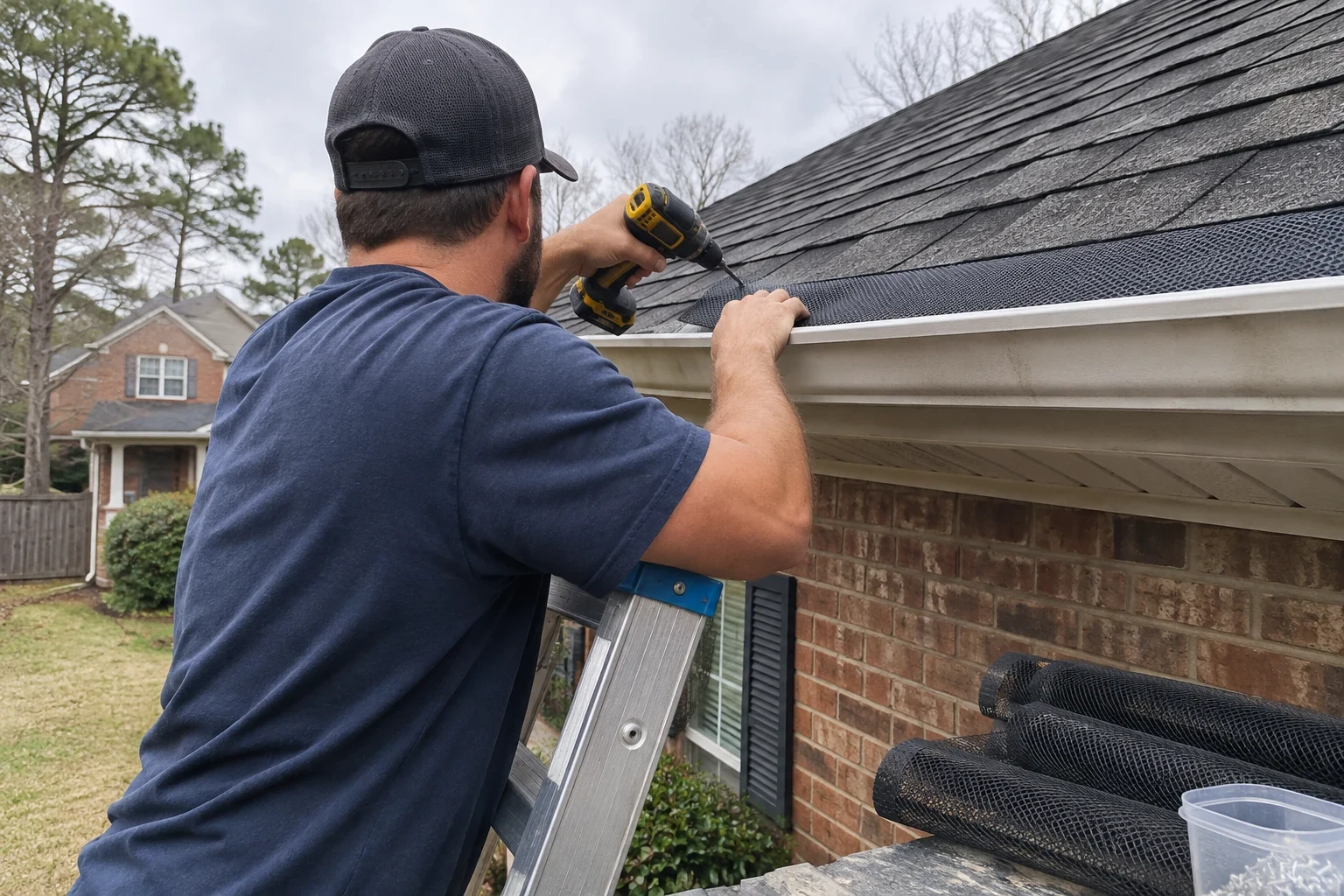
We fit gutter guards that keep pine needles, leaves and grit out of the trough while letting heavy rain through. Each guard is sized to your gutter profile, fastened at the right spacing and set at the right angle so it stays put and keeps working.
What a Gutter Guard Does, and Where It Falls Short
Gutter guards close off the open top of the trough with a perforated or mesh surface. Rain drops through the holes into the gutter below. Leaves, pine needles and seed pods catch on the surface, dry in the sun and blow away. You get a gutter that keeps moving water, less spillover onto the fascia and no stagnant pools where mosquitoes breed.
We tell every customer the same thing first: a guard reduces upkeep, it does not end it. Fine stainless mesh blocks almost everything, but spring pollen and shingle grit can leave a film across it. Wider-hole perforated aluminum sheds that film more easily, yet short needles can slip through. Which one makes sense depends on the trees over your roof, the roof pitch and the gutters already hanging on your home.
Some roofs do better with a solid hood that guides water around a rounded front edge. We explain that option on our gutter covers page. Guards are the open, see-through choice.
What Goes Into a Guard Installation
A guard matched to your debris
Pine needles call for stainless micro-mesh with openings small enough that needles can't spear through. Broad oak and maple leaves can be handled by heavier perforated aluminum. We look at the trees before we recommend a product.
Profile and size check
We measure whether your gutters are 5-inch or 6-inch K-style or half-round. A guard cut for the wrong width bows in the middle or leaves a gap at the back edge, and both let debris in.
Fastening that leaves shingles alone
Many guards are sold to slide under the first course of shingles. That can break the adhesive seal strip and lift tabs in high wind. Where the roof allows, we fasten to the gutter's front lip and the back edge or drip edge instead.
Pitch and angle setup
A guard set flat holds wet leaves; one tilted too steeply can let water sheet past it in a downpour. We set the panel angle to suit your roof pitch so water follows the surface into the trough.
Corners, seams and valleys
Miters and panel overlaps are trimmed and joined so there are no open slots. Where a roof valley dumps concentrated water, we can add a diverter so the flow lands inside the gutter instead of shooting over the guard.
Pre-install inspection
Before a guard goes on, we check hangers, end caps and seams. A guard locks in whatever is underneath, so loose hangers or a sagging run get flagged first and handled through gutter repair if you want it.
Signs Your Gutters Need Guards
- Overflow at the same spots every storm
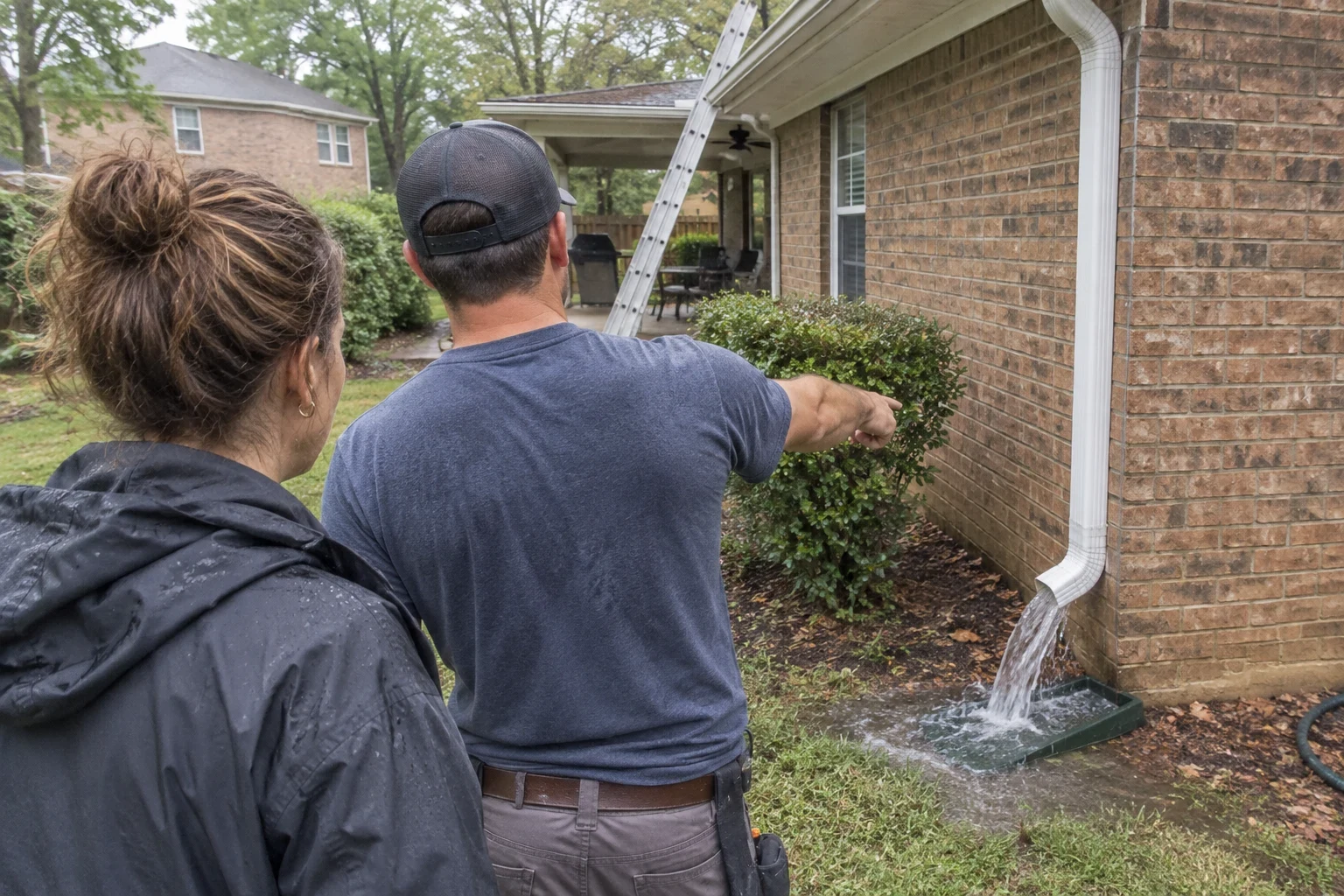
- When rain pours over the front lip in one stretch time after time, a clump of debris has usually settled there. A guard stops that clump from forming again after the trough is cleared.
- Seedlings or moss in the trough
- Plants only take root where leaves and needles have broken down into something close to soil. That soaked layer keeps the gutter metal and the board behind it wet for days after each rain.
- Fascia that is stained, swollen or soft
- Water marks running down the trim board, or wood that gives when you press it, mean the gutter has been backing up and spilling over its rear edge. A guard keeps the channel open so water stays inside it.
- Tall pines or oaks over the roofline
- Loblolly pines across the Lowcountry shed needles almost all year, and those needles weave into a dense mat within weeks. If branches hang over your roof, guards tend to earn their cost fast.
- Pests around the roof edge
- Wasps, nesting birds and mosquitoes all move into gutters packed with wet debris. A covered trough leaves them little room to settle.
How the Work Goes on Install Day
- 1
Walk the roofline
We look at every run, note the tree cover, the roof pitch and where valleys meet the gutter. You get a plain explanation of which guard fits and why.
- 2
Clear and check the trough
Debris comes out so the guard sits on an empty channel. We check that hangers are tight and that water still runs toward the outlets with the right slope.
- 3
Cut, fit and fasten
Panels are cut to length, mitered at corners and overlapped in the direction of flow. Screws go in at the manufacturer's spacing so the guard can't lift or rattle in a summer thunderstorm.
- 4
Water test and cleanup
We run water from a hose on the roof to confirm it passes through the guard and reaches the trough. Cut scraps, screws and debris are picked up from the beds and lawn before we leave.
What Sets the Price of Gutter Guards
Guard pricing comes down to how many feet of gutter you have, which guard material suits your trees and how hard the roof edge is to reach safely. We walk the roofline and give you a written estimate before any work starts, at no charge.
- Linear footage
- Guards are measured by the foot. A ranch with one long run costs less than a home with many short runs and corners, because every miter takes extra cutting and fitting.
- Guard material
- Stainless micro-mesh in an aluminum frame costs more than perforated aluminum or plastic screen. It also lasts longer and handles pine needles far better.
- Story height and roof pitch
- Second-story gutters and steep roofs need more ladder setup and fall protection, which adds time.
- Condition of the gutters underneath
- If hangers are loose or a run sags, those need fixing before a guard goes on. We point that out in the estimate so it never shows up as a surprise.
Gutter Guard Questions
- Will gutter guards void my roof warranty?
- Some can, if they are slid under shingles and break the seal strip. That's why we prefer guards that fasten to the gutter lip and back edge without disturbing the shingles. If your roof is new, check the shingle warranty terms and we'll choose a mount that stays clear of them.
- Do I still need to maintain my gutters with guards on?
- Less often, but yes. Pollen and fine grit can film over mesh, and dry leaves sometimes sit on top in still weather. A soft brush pass over the guard surface once or twice a year keeps most systems flowing.
- Can guards handle heavy summer downpours?
- A good mesh guard set at the right angle takes in a lot of water. Where a roof valley concentrates flow onto a short stretch, we add a diverter so that spot doesn't overshoot.
- What's the difference between your guards and gutter covers?
- Guards are open screens or mesh that water drops through. Gutter covers are solid hoods where water follows a curved edge into the gutter. Covers suit some heavy-leaf roofs, while mesh guards handle needles and fine debris better.
- Is the installation covered?
- Yes. Our guard installations carry a 2-year workmanship warranty. If a panel we fastened works loose or a seam we joined opens up in that time, we come back and fix it.
Get Guards Sized for Your Roof
We earned the Angie's List Super Service Award in 2018, and we bring the same care to every screw and miter on your gutters. Tell us about your trees and roofline by phone and we'll set up a time to measure.